Metal: Clarity, Letting Go and the Breath of the Lungs
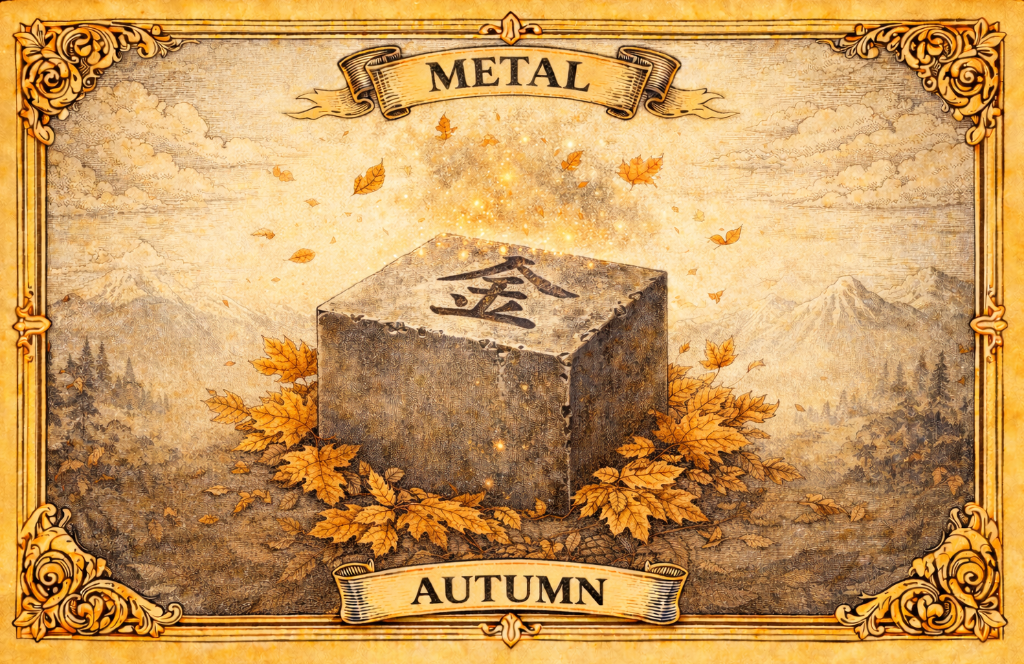
Within the Five Elements system of Chinese Medicine, Metal represents the phase of refinement and release. It is the energy that follows fullness and precedes rest, shaping what has been gathered and discarding what is no longer needed. Metal corresponds to autumn, the season of contraction, falling leaves and clear air. In the body and psyche, this quality is expressed through the Lungs, the organs that govern breath, boundaries and our relationship with loss. When Metal energy is balanced, we experience clarity, discernment and a natural capacity to let go. When it is disturbed, grief, rigidity or a sense of emotional constriction can arise.
Autumn marks a turning point in the natural cycle. After the expansive expression of summer, energy begins to draw inward. Plants release their fruit and shed their leaves, conserving what matters for the winter ahead. In Chinese Medicine, the Lungs mirror this process. They regulate the intake of fresh Qi through breathing and manage the release of what is spent. This constant exchange between inside and outside reflects Metal's essential function: defining what belongs within us and what must be released.
The Lungs occupy a central role in maintaining rhythm and coherence. They govern respiration, the movement of Qi throughout the body and the integrity of the body's surface. Through breath, the Lungs establish a dynamic boundary between self and world. When Lung energy is strong, this boundary feels flexible and responsive. We are open to experience, yet able to maintain a clear sense of self. When Lung energy is weak or constrained, we may feel either exposed and vulnerable, or overly defended and closed.
Emotionally, Metal is associated with grief. In the Five Elements, grief is understood not as a disorder but as a natural response to loss and change. It is the emotional counterpart of autumn, a season that teaches us impermanence. Healthy grief allows us to acknowledge what has passed and integrate its meaning. It softens us without overwhelming us. When grief is unresolved or prolonged, however, it can impair the Lungs' ability to circulate Qi, leading to both emotional heaviness and physical symptoms such as shallow breathing or fatigue.
Autumn is often the time when Metal imbalances become most visible. As the days shorten and the air cools, the natural movement toward inwardness can stir memories, reflections and feelings of loss. When the Lungs are supported, this inward turn feels clarifying. When they are not, sadness may deepen into withdrawal or rigidity. From a Five Elements perspective, this is not pathology, but a sign that the process of letting go has been interrupted.
Beyond emotion, the Lungs influence our sense of order and meaning. Metal energy gives shape and structure to life, allowing us to organise experience and discern what is essential. When this energy is balanced, we experience a quiet dignity and an appreciation for simplicity. When it becomes excessive, it may manifest as perfectionism or inflexibility; when deficient, as disorganisation or a lack of clear boundaries.
Within the wider Five Elements system, Metal plays a crucial regulatory role. It is nourished by Earth, which provides stability and support, and it gives rise to Water, enriching depth and reserves. If Metal cannot release what is spent, Water becomes burdened, leading to stagnation and depletion. Balance, therefore, depends on Metal's capacity to complete its work of refinement.
Modern life often challenges the Metal element. Continuous stimulation, unresolved grief and a reluctance to pause can impair our ability to process and release experience. In such circumstances, symptoms may appear not only in the lungs and immune system, but also in our emotional life, as a persistent sense of sadness or emotional constriction.
Metal offers a profound lesson about health. It reminds us that vitality is not sustained by accumulation alone, but by the capacity to let go. Breath, like life, depends on both inhalation and exhalation. Holding on—whether to emotions, identities or expectations—interrupts this rhythm.
In Chinese Medicine, balance is found not in resisting change, but in moving with it. The Metal element teaches us to honour endings, to refine what has been learned and to release what no longer serves. When the Lungs are in harmony with autumn, grief becomes a process of meaning rather than stagnation, breath becomes a source of clarity, and letting go reveals itself not as loss, but as a necessary act of care.